Overview
What is ShiftRx?
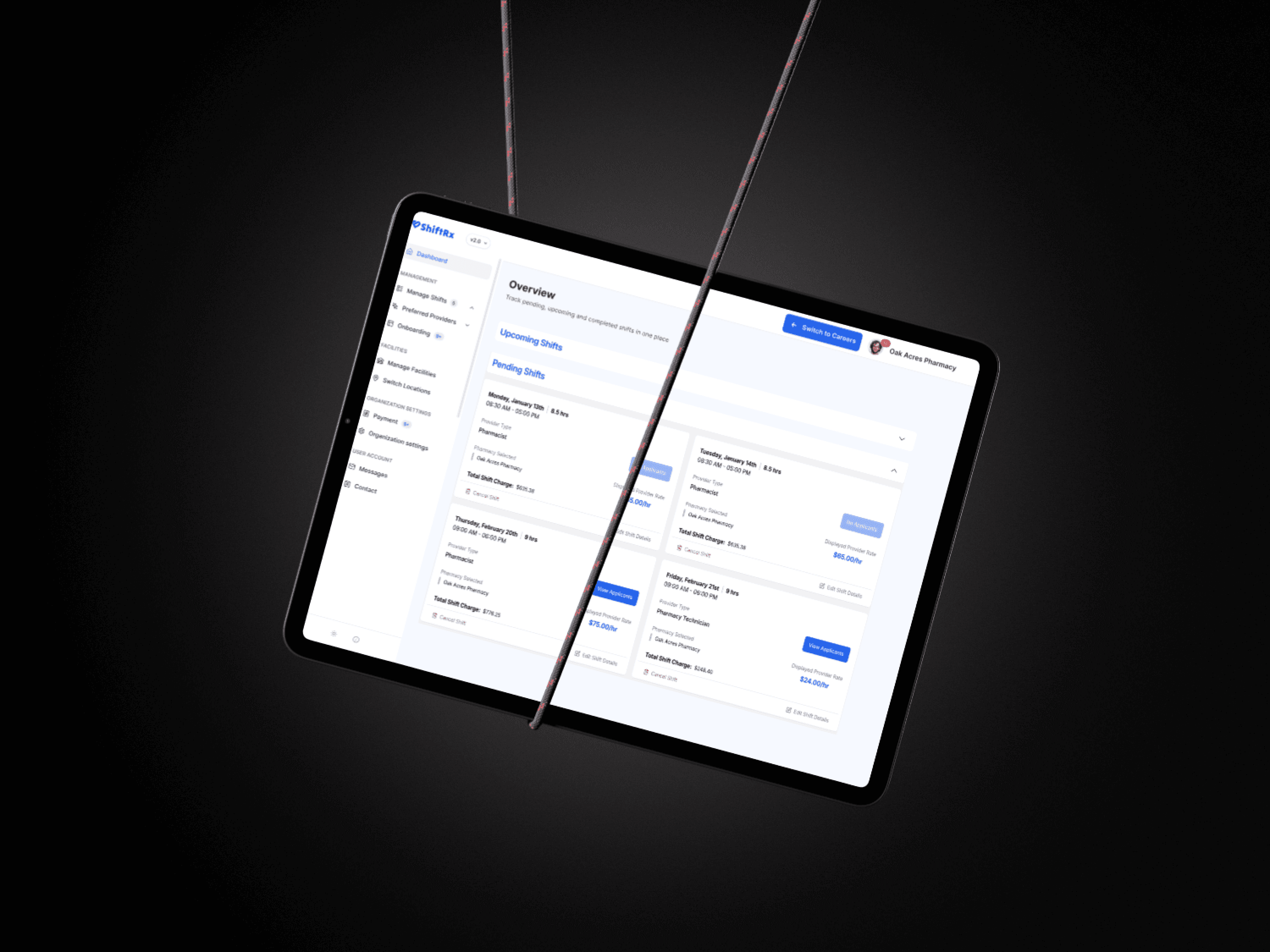
ShiftRX is a platform designed to connect healthcare facilities with pharmacy technicians. The primary goal of this project was to improve the user experience, enhance usability, and create a streamlined interface for managing shifts, providers, and organizational settings.
This redesign aimed to address critical usability challenges and empower facility managers to manage their tasks more efficiently. By adopting user-centered design principles, the project sought to bridge the gap between healthcare facilities and pharmacy technicians seamlessly.
My Role
Designing for Impact in Healthcare Staffing
As the lead designer for this project, my responsibilities included:
Conducting user research to identify pain points and opportunities for improvement.
Redesigning the navigation structure to enhance usability and reduce clutter.
Developing consistent design patterns, such as expandable card layouts, to improve information clarity.
Creating an intuitive dashboard to streamline shift management.
Preparing a comprehensive Figma handoff, including detailed documentation and prototypes, to facilitate seamless developer collaboration.
My role required balancing user needs with business goals, ensuring the design solutions were practical, impactful, and aligned with stakeholders' expectations.
Challenges
Overcoming Usability and Workflow Barriers
Identifying the Roadblocks
ShiftRx faced several critical hurdles that affected its overall usability and effectiveness:
Disorganized Navigation: The platform's navigation lacked structure, making it difficult for users to locate essential features and complete key actions efficiently.
Inconsistent Information Display: Provider and shift information were presented in varying formats, causing confusion and inefficiency in task execution.
Fragmented Dashboard Views: The dashboard did not provide a unified or comprehensive view of shifts, forcing managers to navigate multiple sections to track pending, upcoming, or completed shifts.
Handoff Inefficiencies: The absence of a detailed developer handoff process led to ambiguities in implementation, resulting in delays and a higher risk of misaligned features.
Addressing the Challenges
To tackle these issues, a holistic approach was adopted:
Simplified Navigation: Grouped related functionalities under intuitive categories to improve accessibility and minimize search time.
Standardized Design Patterns: Introduced consistent, expandable card layouts to present information clearly and reduce user confusion.
Streamlined Dashboard: Enhanced the dashboard with a unified view of all shifts and actionable items to simplify schedule management.
Comprehensive Handoff Process: Developed detailed documentation and interactive prototypes in Figma to ensure seamless collaboration with developers.